
Skincare Ingredients & Formulation Science
Professional knowledge for evaluating active ingredients, formulations, product performance and skincare lines
Behind every cleanser, serum, moisturizer, mask and professional treatment product is a formulation.
And behind every formulation is science.
Modern skincare products may combine active ingredients, humectants, emollients, antioxidants, preservatives, stabilizers, delivery systems, texture modifiers and many other functional components.
For estheticians, skincare specialists, medical-aesthetic professionals, spa and clinic owners, educators, buyers and other beauty-industry professionals, understanding Skincare Ingredients & Formulation Science has therefore become increasingly important.
Clients are more ingredient-aware than ever.
They ask about retinol, vitamin C, hyaluronic acid, peptides, niacinamide, ceramides, AHAs, BHAs and whatever new ingredient is currently circulating online.
But the professional’s role should extend beyond repeating ingredient claims.
Professionals need to understand: why an ingredient is present, how the complete formula is constructed, how the product fits into a treatment protocol and whether the formulation is appropriate for the skin being treated.
The ESI Show Knowledge Centre brings together professional articles, FAQs and educational resources designed to help industry professionals move beyond ingredient trends and evaluate skincare products more critically.
Because a professional formulation is rarely successful because of one impressive ingredient.
Its value comes from how the complete formula works together.

This content continues below our upcoming show overview…










Ingredient lists are only the starting point
An INCI list provides useful information.
But it does not tell the professional everything about how a product will perform.
Two products may contain the same highlighted ingredient and still behave very differently.
- Concentration can differ.
- Ingredient form can differ.
- pH can differ.
- Delivery systems can differ.
- Supporting ingredients can differ.
- Stability can differ.
- Packaging can differ.
- This is why professional skincare evaluation should not stop at:
“Does this contain ingredient X?”
A better question is: “How has this ingredient been formulated, why was it selected and what role does the finished product serve?”
Professionals need to evaluate the formulation as a system.
Start with our complete professional beauty guide

Looking for the bigger picture?
The Complete Guide to Professional Esthetics, Medical Aesthetics & the Beauty Industry in Canada brings together many of the subjects covered throughout the ESI Show Knowledge Centre.
Explore professional skincare, medical aesthetics, formulation science, skin concerns, equipment purchasing, safety, spa and clinic management, industry trends and professional development within one comprehensive resource.
It is an ideal starting point for professionals before moving into the Knowledge Centre’s specialized categories.
Active ingredients need professional context
In everyday skincare language, an active ingredient is generally understood as an ingredient incorporated to support a particular objective.
- Hydration.
- Exfoliation.
- Brightness.
- Barrier support.
- Antioxidant activity.
- Oil-management strategies.
- Texture.
- Visible signs of aging.
Different ingredients may address similar objectives through different approaches.
The professional’s role is therefore not simply to memorize ingredient names.
It is to understand: why a specific ingredient or formulation may make sense within a particular treatment or home-care strategy.
That knowledge supports better consultation, product recommendation and professional line selection.

Hyaluronic acid demonstrates why the complete formula matters
Hyaluronic acid is one of the most recognizable skincare ingredients.
It is commonly associated with hydration-focused formulations and appears in serums, moisturizers, masks and professional treatment products.
But the presence of hyaluronic acid alone tells the professional very little about the finished formula.
Different molecular characteristics, concentrations and surrounding ingredients can influence product behaviour.
The same applies to texture and delivery.
This illustrates one of the most important principles in professional formulation science: ingredient recognition is not the same thing as product evaluation.
Retinoids require routine-level thinking
Retinoids remain important ingredients within professional skincare discussions involving:
texture, visible aging and other cosmetic objectives.
But professional product recommendations should consider more than the ingredient itself.
- Tolerance matters.
- Strength matters.
- Frequency matters.
- The formulation matters.
- The rest of the routine matters.
A client using several active products simultaneously may already be receiving significant treatment intensity.
Professionals therefore need to assess: the entire skincare program—not each product independently.
This becomes especially important when professional exfoliation or advanced aesthetic procedures are also involved.

50 professional questions about ingredients & formulation
- How should professionals evaluate hyaluronic acid products?
- What is the practical difference between AHA and BHA?
- Why are preservatives used?
- Does a higher active percentage mean a stronger professional product?
- What should practitioners know about peptides?
- Why do ceramides matter in barrier-focused formulations?
- Does natural automatically mean safer?
- Why can packaging influence product quality?
- How does pH affect certain formulations?
Our 50 Skincare Ingredients & Formulation Science FAQs provide concise professional answers to common questions involving:
ingredients, formulations, product performance and professional skincare evaluation.
Use the collection as a quick-reference tool or continue into our deeper educational resources when more technical context is needed.
VIEW ALL 50 SKINCARE INGREDIENTS & FORMULATION SCIENCE FAQs →
Evaluate professional skincare brands at Esi Show
Ingredient knowledge becomes especially valuable when professionals can speak directly with the companies developing, manufacturing and distributing professional skincare.
ESI Show brings together professional skincare brands, manufacturers, distributors, educators, estheticians, medical-aesthetic professionals, spa and clinic owners and professional buyers.
Within this B2B environment, industry professionals can go beyond the package.
- Ask about formulations.
- Question ingredient claims.
- Explore professional protocols.
- Compare competing lines.
- Learn about new formulation technologies.
- Attend professional education.
- Discuss retail programs.
- Meet brand educators.
- Investigate margins and distribution.
Understand how products are intended to integrate into both: professional treatment + home care.
For owners and buyers, this creates an opportunity to evaluate not simply: “Do we like the product?”
but: “Does this professional skincare line deserve a place in our treatment rooms and retail business?”
ESI Show is a dedicated B2B trade show for beauty, esthetics and medical-aesthetics professionals and is not open to the general public.
Skin Types & Skin Conditions: Assessment Comes Before Treatment
Professional skincare continues to become more sophisticated.
- More ingredients.
- More technologies.
- More devices.
- More treatment options.
- More active formulations.
But those advances make one fundamental professional skill even more important: understanding the skin in front of you.
- Identify the skin type.
- Observe current conditions.
- Evaluate barrier status.
- Understand the client’s concerns.
- Review relevant history.
- Consider home care.
- Identify contraindications.
- Recognize professional limitations.
- Establish priorities.
Then select the treatment. That sequence matters. Because the best serum is not the best serum for everyone.
The strongest peel is not the best peel for everyone. The newest technology is not the best technology for everyone. And sometimes the correct professional decision is not to treat at all.
Understanding Skin Types & Skin Conditions gives professionals the foundation they need to make those decisions intelligently.
Assessment comes before treatment.
And as professional skincare becomes increasingly advanced, that fundamental principle becomes more—not less—important.
Explore Our Skincare Ingredients & Formulation Science Knowledge Centre
Vitamin C Should Be Evaluated as a Formulation Category
“Contains vitamin C” sounds simple.
Professional formulation science makes it more complicated.
Different forms of vitamin C can have different stability requirements, formulation characteristics and professional applications.
Packaging may also matter because certain formulations can be influenced by light, air and other environmental conditions.
A professional buyer should therefore avoid comparing vitamin C products solely according to the front label.
Ask:
- Which form is used?
- Why?
- How is it stabilized?
- How is the product packaged?
- What is its intended professional or retail role?
This creates a much more meaningful comparison.
Niacinamide Illustrates the Problem With Ingredient Saturation
Niacinamide appears across an enormous number of modern formulations.
Its versatility has made it extremely popular.
But widespread use also creates a professional challenge.
A client may unknowingly use niacinamide in cleanser, serum, moisturizer and additional products.
The professional therefore needs to consider cumulative routine exposure rather than evaluating products in isolation.
This is one reason professional product consultation adds value.
More products containing the same desirable ingredient do not automatically create a better routine.
Peptides Should Trigger More Specific Questions
The term peptide covers a broad ingredient category.
A product marketed as containing peptides should therefore lead to deeper professional questions.
- Which peptides?
- For what intended purpose?
- At what concentration where disclosed?
- How are they formulated?
- What supports the claim?
- How does the product fit within the professional line?
For buyers and practitioners, simply seeing “peptide complex” prominently displayed on packaging should not end the evaluation.
It should begin it.
Ceramides Reflect the Growing Focus on Barrier Health
Barrier support has become increasingly important within professional skincare.
Ceramides are commonly incorporated into formulations designed around dryness, dehydration and compromised barrier conditions.
Their growing prominence reflects a larger change in professional treatment thinking.
Traditional skincare discussions often focused heavily on exfoliation, resurfacing and correction.
Modern professional skincare increasingly recognizes that sometimes the appropriate strategy is not greater treatment intensity.
It is better barrier support. This shift should influence both professional protocols and the product lines selected to support them.
AHAs Require More Than Ingredient Recognition
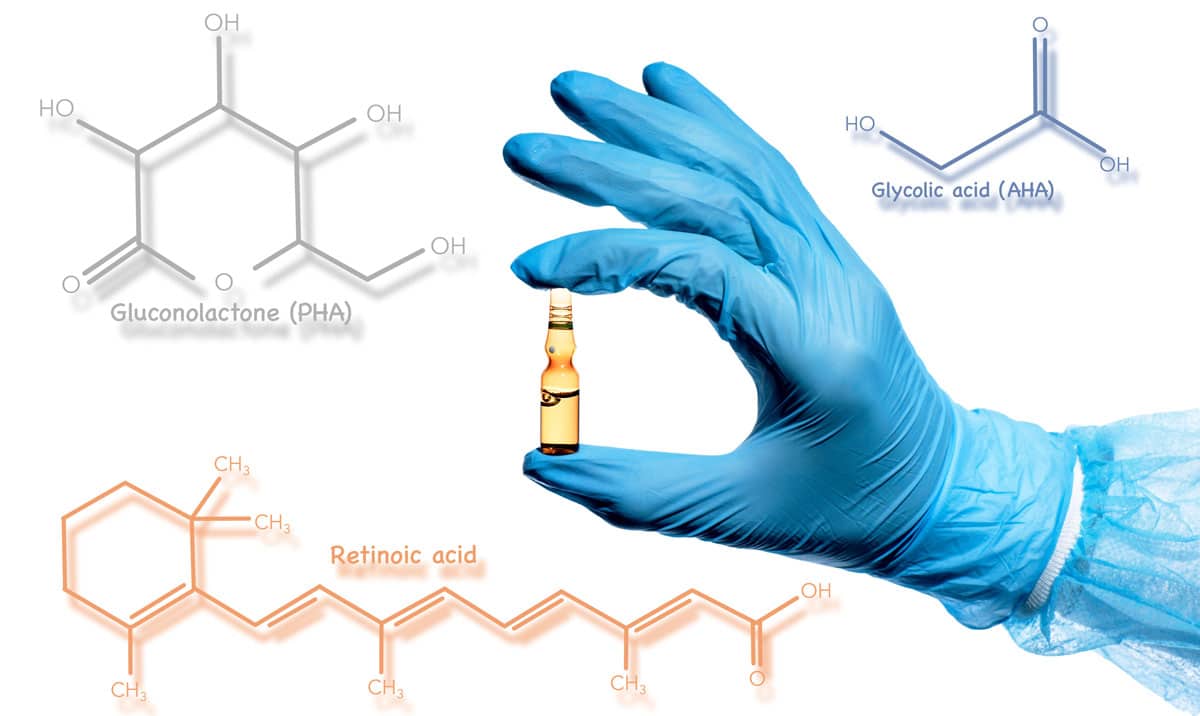
Alpha hydroxy acids such as glycolic acid and lactic acid
are widely used within retail and professional skincare.
But professional understanding should include concentration, pH, contact time, formulation and skin tolerance.
The same acid can behave very differently in a daily-use cleanser, serum or professional peel.
This is why professionals should avoid comparing acid products exclusively according to percentages.
The professional application determines the context.
BHAs Offer Different Professional Applications
Salicylic acid is the best-known BHA used in skincare.
It is frequently associated with formulations designed for oily, congested or acne-prone skin.
But again, a cleanser containing salicylic acid is not equivalent to a professional exfoliating treatment simply because the ingredient name appears in both products.
Professionals should evaluate the concentration, formula, intended frequency, overall routine and treatment context.
Ingredient education helps practitioners understand where the product belongs, not simply what the ingredient is known for.
PHAs Expand the Exfoliation Toolbox
Polyhydroxy acids have become increasingly visible in modern skincare.
For professionals, the significance lies in having more formulation options available.
Different exfoliating categories may allow practitioners to tailor recommendations according to:
skin condition, tolerance and treatment objectives.
But expanding choice also increases the need for formulation knowledge.
The question should never become: “Which acid is trending?”
It should remain: “Which formulation makes sense within this professional strategy?”
Exfoliation Is Where Routine Analysis Becomes Critical
Clients can easily combine acid cleansers, exfoliating toners, peel pads, scrubs, retinoids and professional treatments.
Each product may appear reasonable independently.
The complete routine may become excessive.
Professionals can provide enormous value by identifying overlap, redundancy and inappropriate treatment intensity.
Sometimes improving a skincare strategy means removing products rather than recommending more of them.
This is particularly relevant when clients are receiving professional peels or advanced treatments.
Antioxidants Need Formulation and Stability Context
Antioxidants are widely incorporated into modern professional skincare.
- Vitamin C.
- Vitamin E.
- Botanical compounds.
- Other antioxidant ingredients.
But antioxidants can vary significantly in stability, formulation requirements and product positioning.
Professional buyers should therefore evaluate not simply the antioxidant concept but the finished formula.
- How is it stabilized?
- How is it packaged?
- What role does it serve?
How does it integrate with the professional treatment or retail range?
A strong ingredient story still needs a strong formulation behind it.
Understanding Ingredient Categories Improves Professional Product Evaluation
Professionals benefit from understanding ingredient functions rather than memorizing endless individual ingredient names.
- Humectants.
- Emollients.
- Occlusives.
- Barrier-support ingredients.
- Antioxidants.
- Exfoliants.
- Preservatives.
Understanding these categories makes it easier to interpret how products are constructed.
For example, a moisturizer may combine humectants + emollients + occlusive components + barrier-support ingredients.
That tells the practitioner much more about the product than one highlighted hero ingredient.
Humectants Help Explain Hydration Strategy
Humectants help attract and retain water.
Hyaluronic acid is a famous example.
Glycerin is another highly established and effective humectant.
This is a useful professional lesson.
A formulation does not need the newest trending ingredient to be valuable.
Sometimes well-established ingredients remain common because they perform extremely useful roles.
Professionals should evaluate function before novelty.
Emollients Influence Both Performance and Client Experience
Emollients contribute to softness, smoothness and sensory quality.
That sensory experience matters.
A technically sophisticated formulation has limited practical value if clients dislike using it consistently.
- Texture.
- Spreadability.
- Absorption.
- Finish.
These characteristics can influence adherence to home care.
For professional buyers, product evaluation should therefore consider both: technical formulation + real-world usability.
Occlusives Demonstrate Why Texture Must Match the User
Occlusive ingredients can help reduce moisture loss.
They may be particularly useful within formulations targeting dryness or compromised barrier condition.
But a rich occlusive product that feels excellent on one skin type may feel excessive on another.
There is rarely one universally ideal moisturizer texture.
Professional product recommendations need to consider skin condition, treatment objective and client preference.
That is personalization at the formulation level.
Moisturizers Should Be Evaluated as Systems
A well-designed moisturizer may combine humectants, emollients, occlusives, ceramides, antioxidants and other functional ingredients.
This is why comparing moisturizers according to a single featured ingredient can be misleading.
Professionals who understand formulation structure can more easily explain why one product may suit a client better than another.
They can also evaluate professional skincare lines more strategically.
Preservatives Should Be Understood — Not Feared
Preservatives are frequently misunderstood in consumer skincare discussions.
But products containing water can provide conditions in which microorganisms may grow.
An appropriate preservation system helps protect the formulation during normal use.
The professional question should therefore not simply be: “Does this contain preservatives?”
A more useful question is: “How has this product been formulated and protected to remain stable and appropriate during use?”
Professional education can help move ingredient conversations away from fear-based marketing and toward formulation science.
Get the latest news!
Subscribe to the ESI SHOW Newsletter

Past Events
Watch our exhibitor testimonials